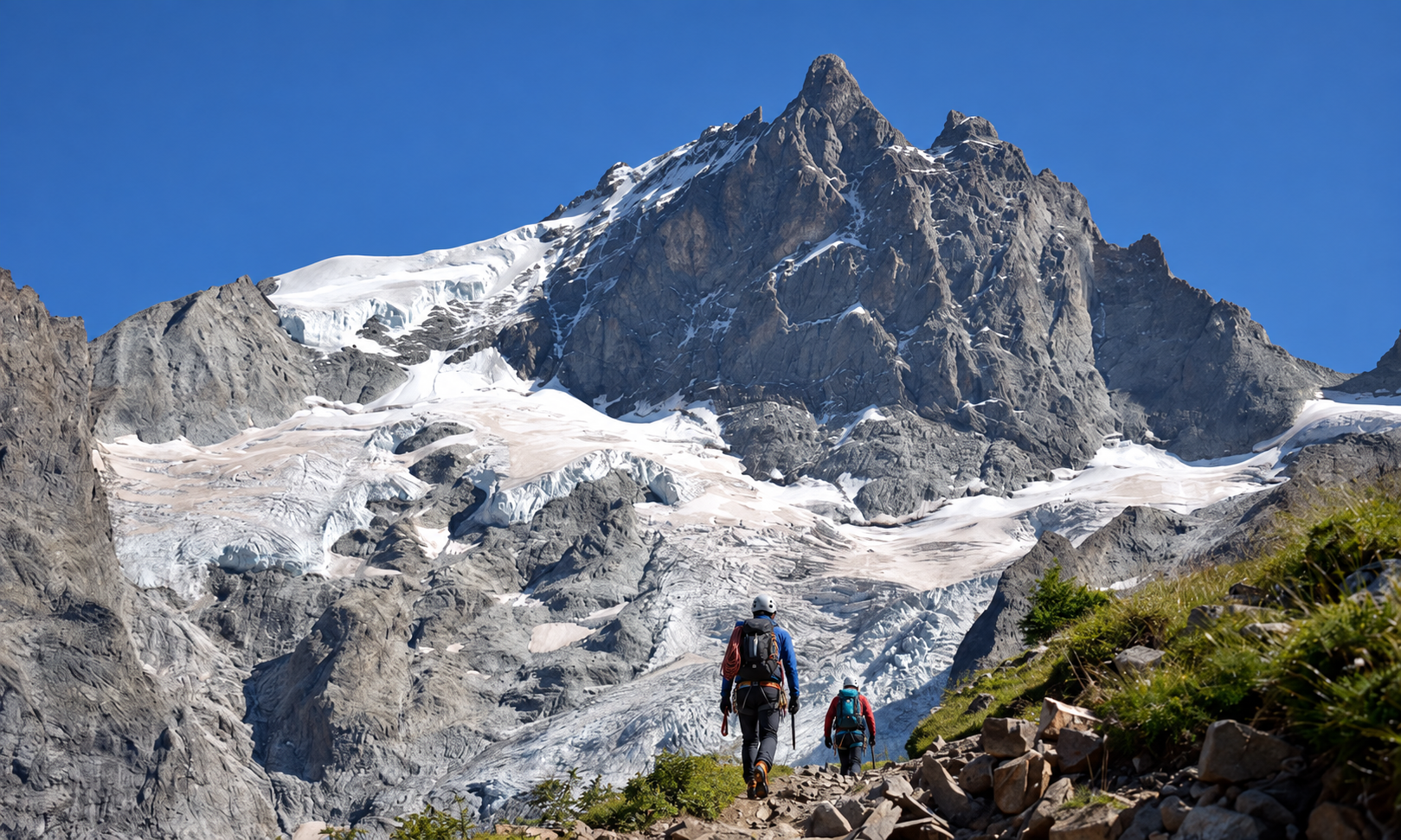
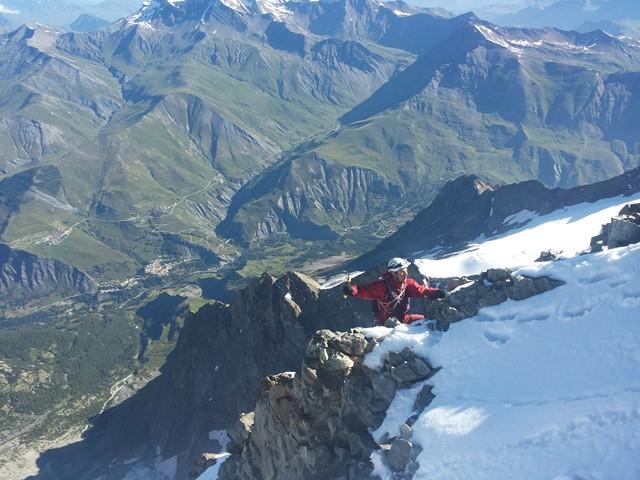
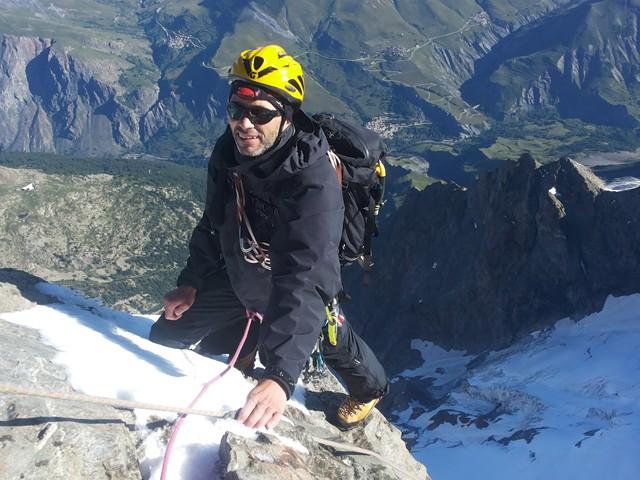
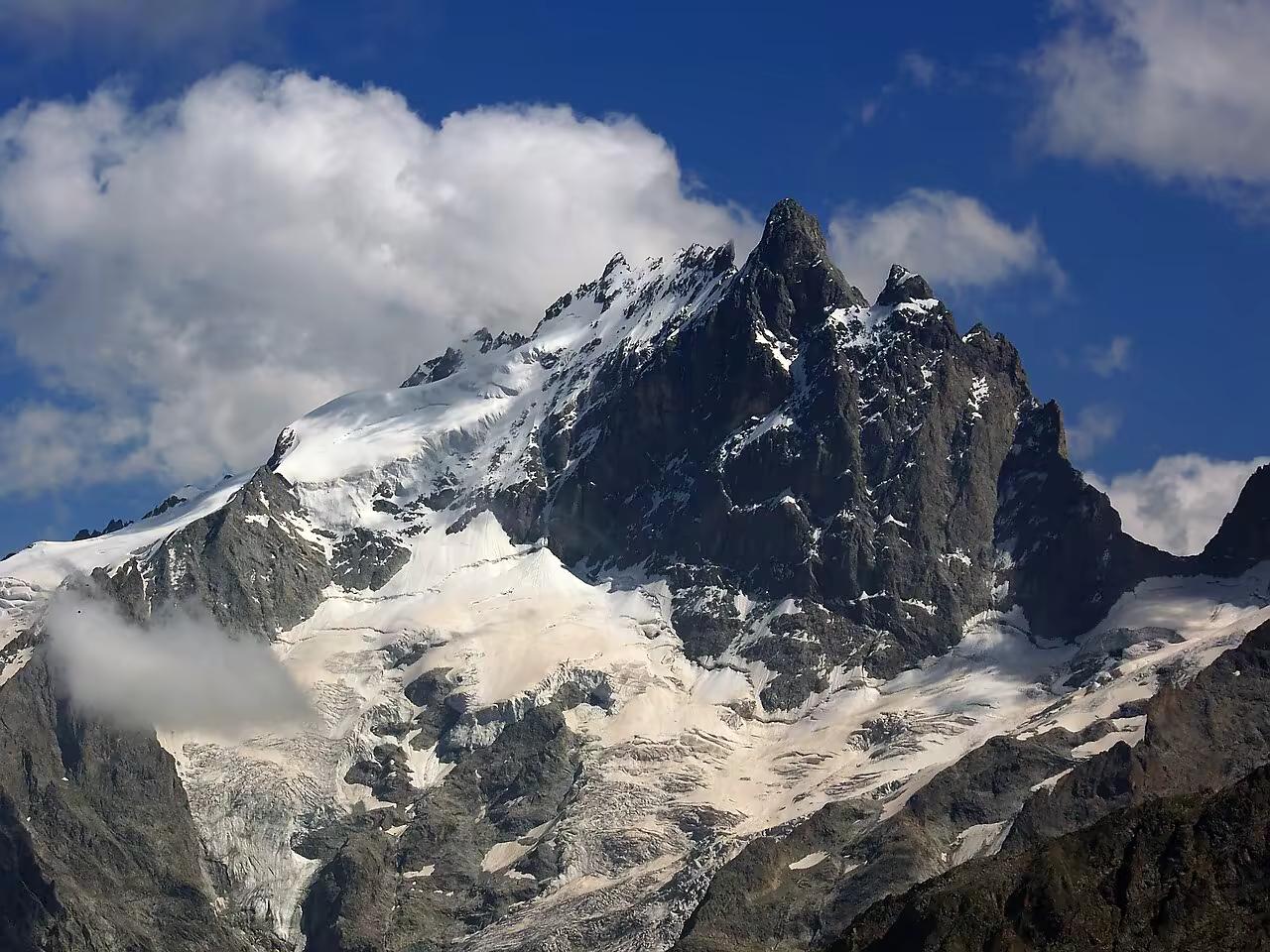
Another outstanding route on La Meije! Seen from La Grave, the Z draws an unmistakable line through the north face: an invitation to weave our way through this immense wall rather than keep gazing up from a café terrace! First climbed in 1933 by Maurice Fourastier and Casimir Rodier, it remains a major alpine adventure, with snow, ice and rock all playing their part.
I invite you to climb this historic route with me, then reach the Grand Pic and continue the journey along the famous ridge traverse. A north face and a little ridge adventure at nearly 4,000 metres.
Day 1 — Approach to the Promontoire hut
From La Bérarde, we walk up the Étançons valley to the Promontoire hut at 3,092 metres. A long approach beneath La Meije’s south face, with plenty of time to appreciate the scale of the mountain! Prepare our equipment and rest before setting off during the night.
Day 2 — Z route, Grand Pic and ridge traverse
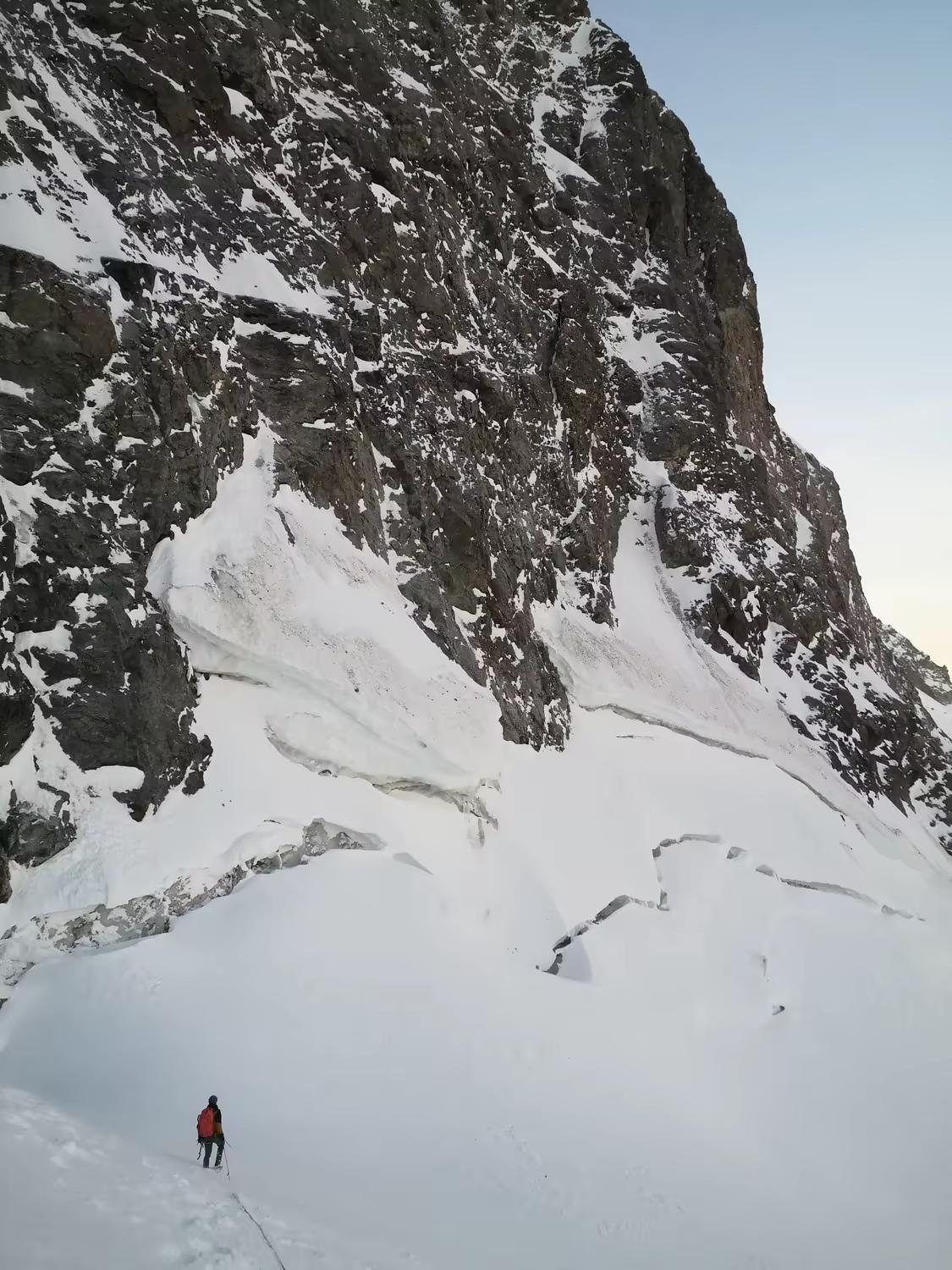
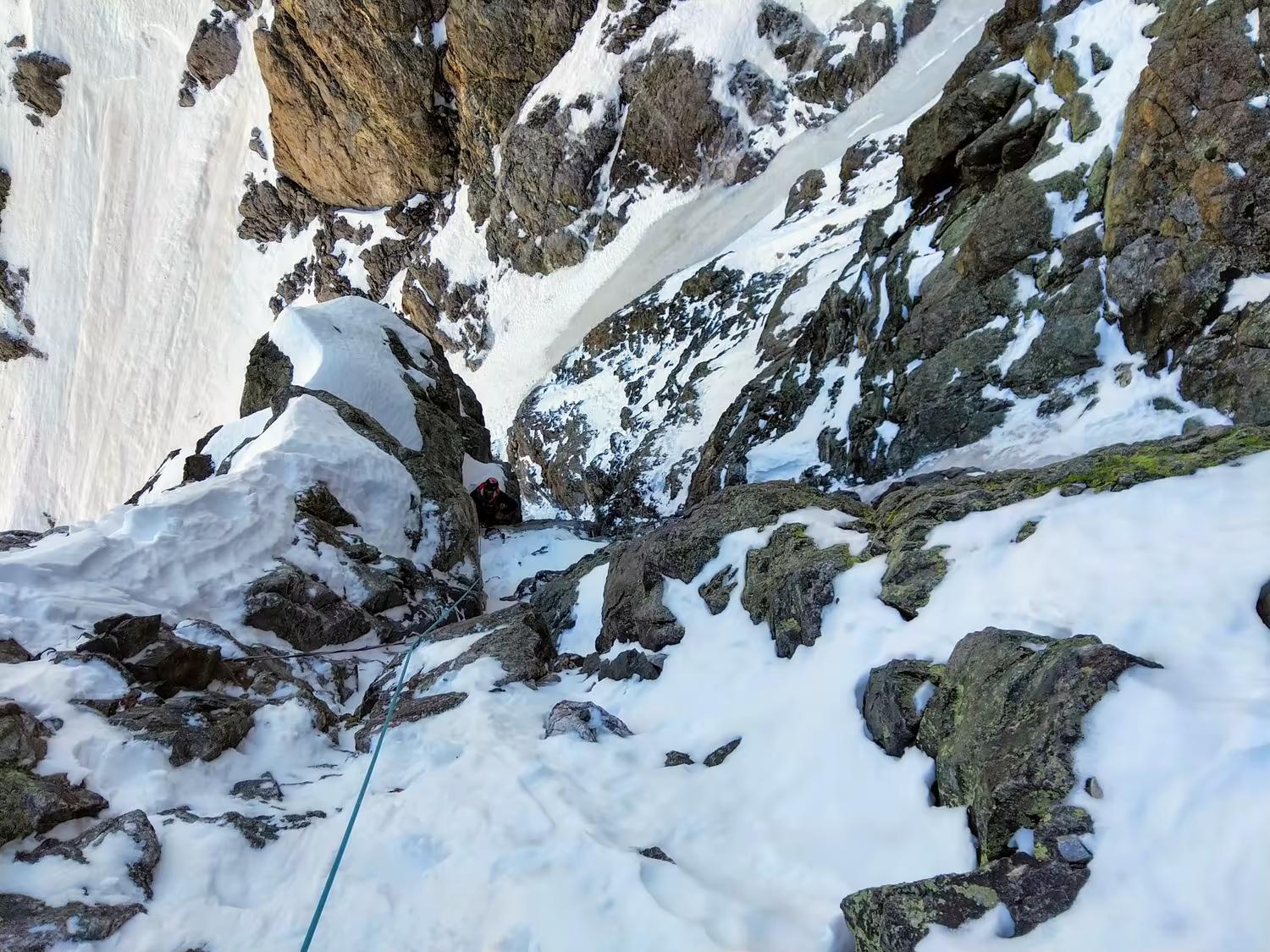
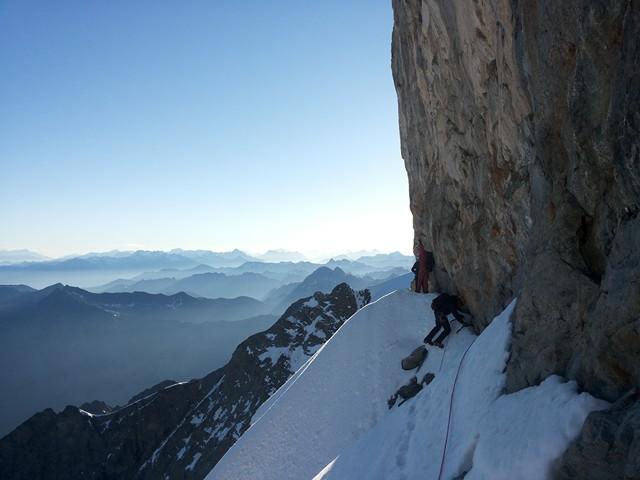
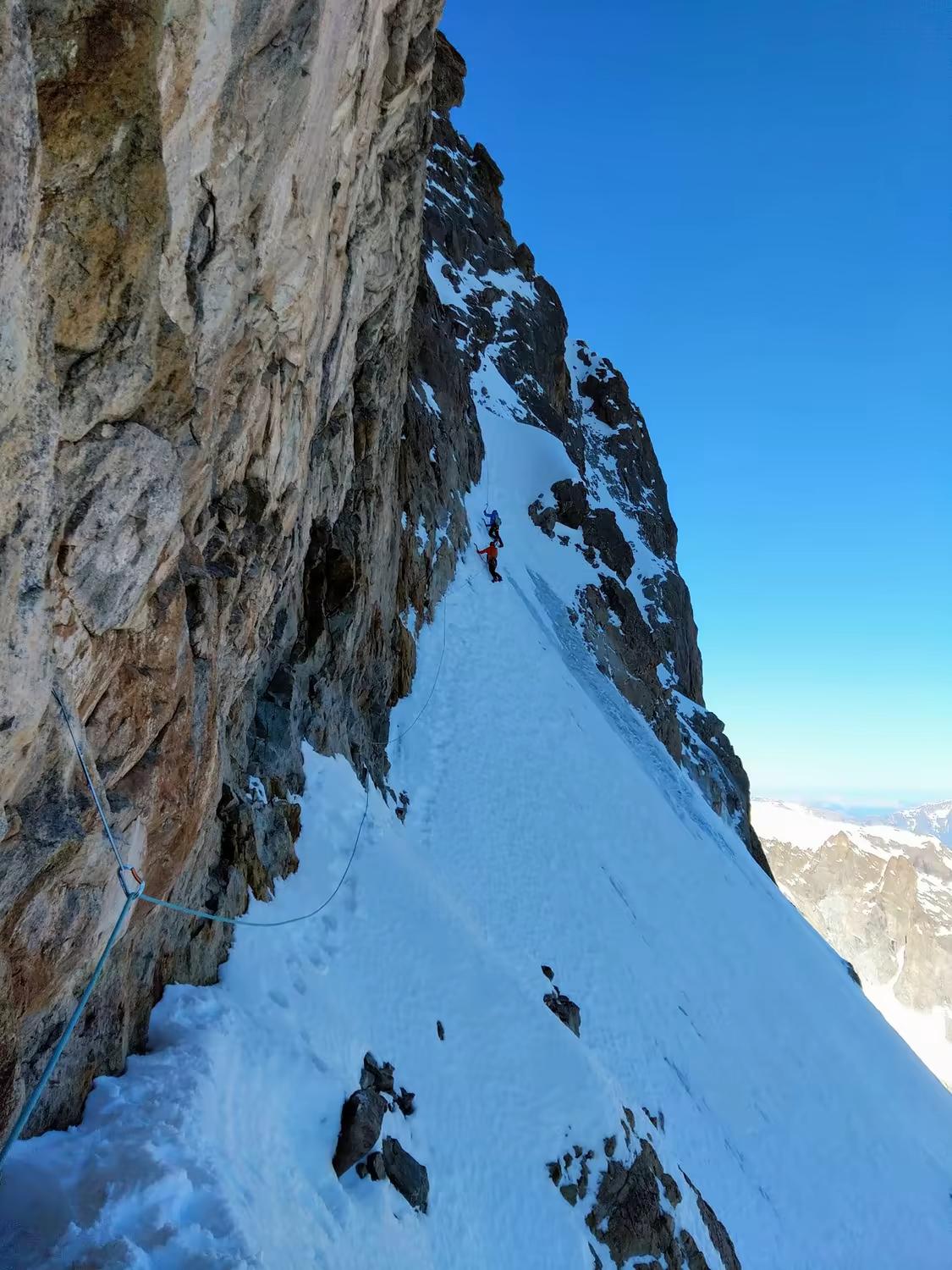
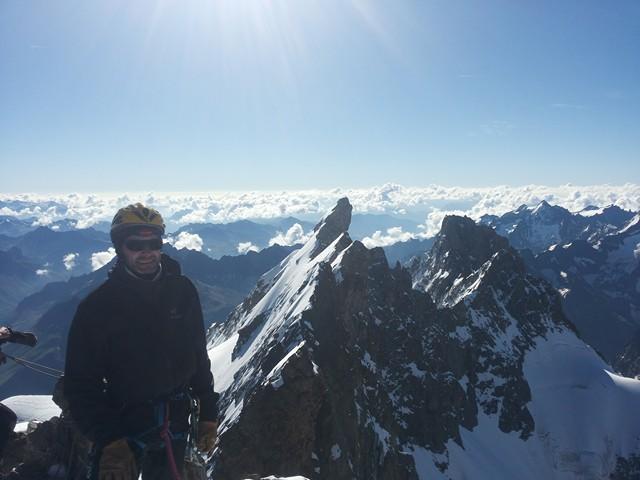
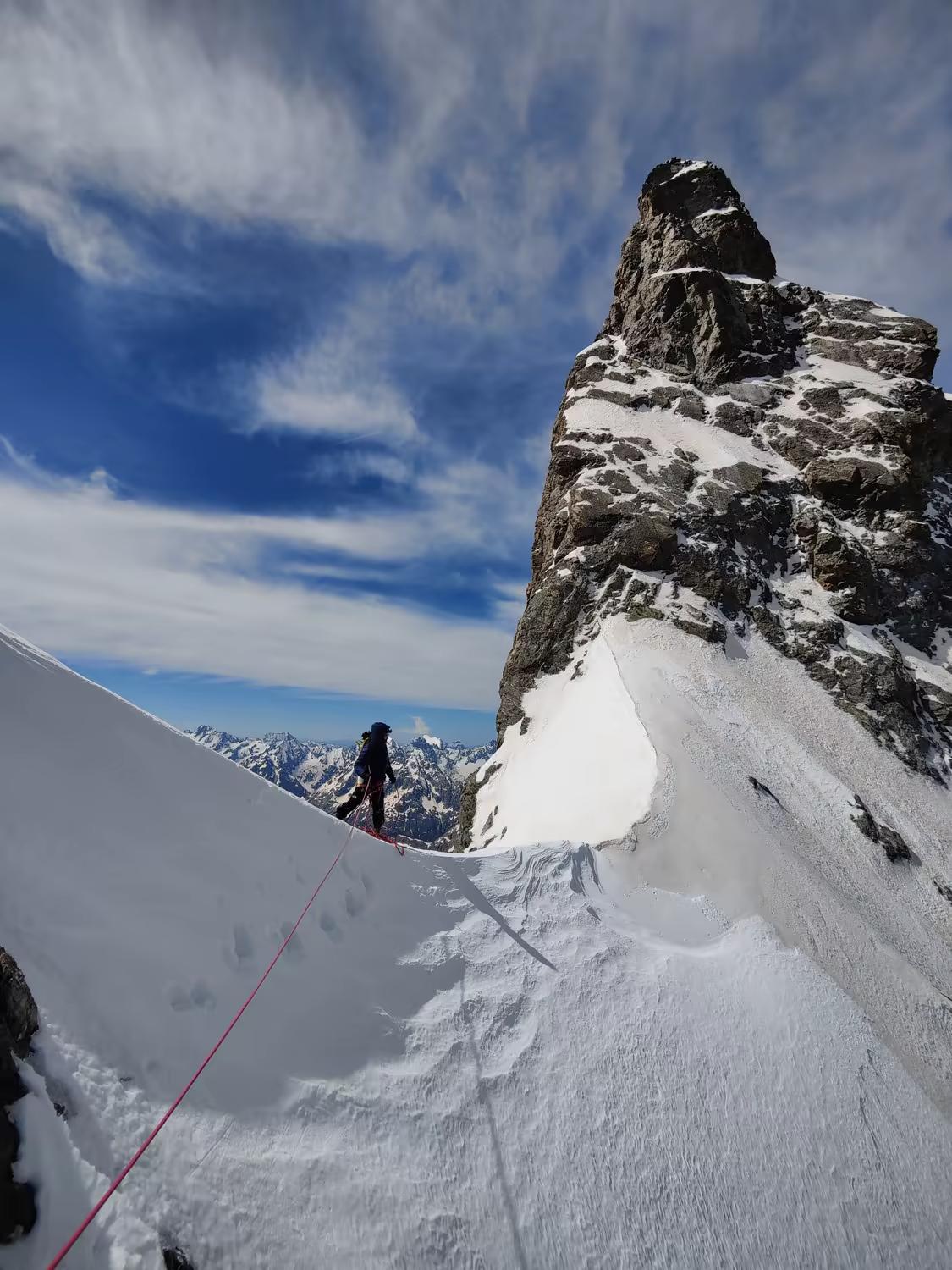
We cross the Brèche de la Meije to reach the glacier and the foot of the north face. Gullies, snow slopes and mixed passages lead us through the Z to the Brèche du Glacier Carré. We continue to the Grand Pic at 3,982 metres via the Cheval Rouge and Chapeau du Capucin.
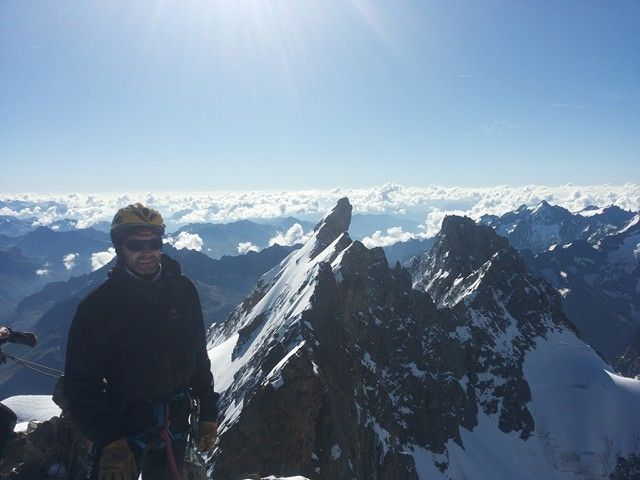
At the summit, a second adventure begins: abseils to the Brèche Zsigmondy, a traverse of the ridge towers and the climb over the Doigt de Dieu. We descend onto the Glacier du Tabuchet to the Aigle hut. Depending on our timing and chosen arrangements, we continue to the valley or spend a second night in a hut.
OPTION Day 3 — Return to the valley, if staying at the Aigle hut
After a night at the Aigle hut, we descend via the Glacier du Tabuchet, the Amieux ledge and the footpath. A chance to enjoy the mountains a little longer and spread the effort before returning to that café terrace!
Guiding fees
2-day option: €1,800. Maximum 1 participant.
3-day option: €2,000. Maximum 1 participant.
Accommodation costs (2-day option)
One night in a mountain hut with half board: approximately €60.
One night with half board for the guide: approximately €30.
Accommodation costs (3-day option)
Two nights in mountain huts with half board: approximately €120.
Two nights with half board for the guide: approximately €60.
La Meije Z route in detail
A historic north-face line: first climbed in 1933 by Maurice Fourastier and Casimir Rodier, the Z follows a distinctive line visible from La Grave, through one of the great walls of the Écrins.
An approach from the Promontoire hut: around two hours to cross the Brèche de la Meije and reach the start on the glacier. Crossing the bergschrund depends on snow conditions and may already require some effort!
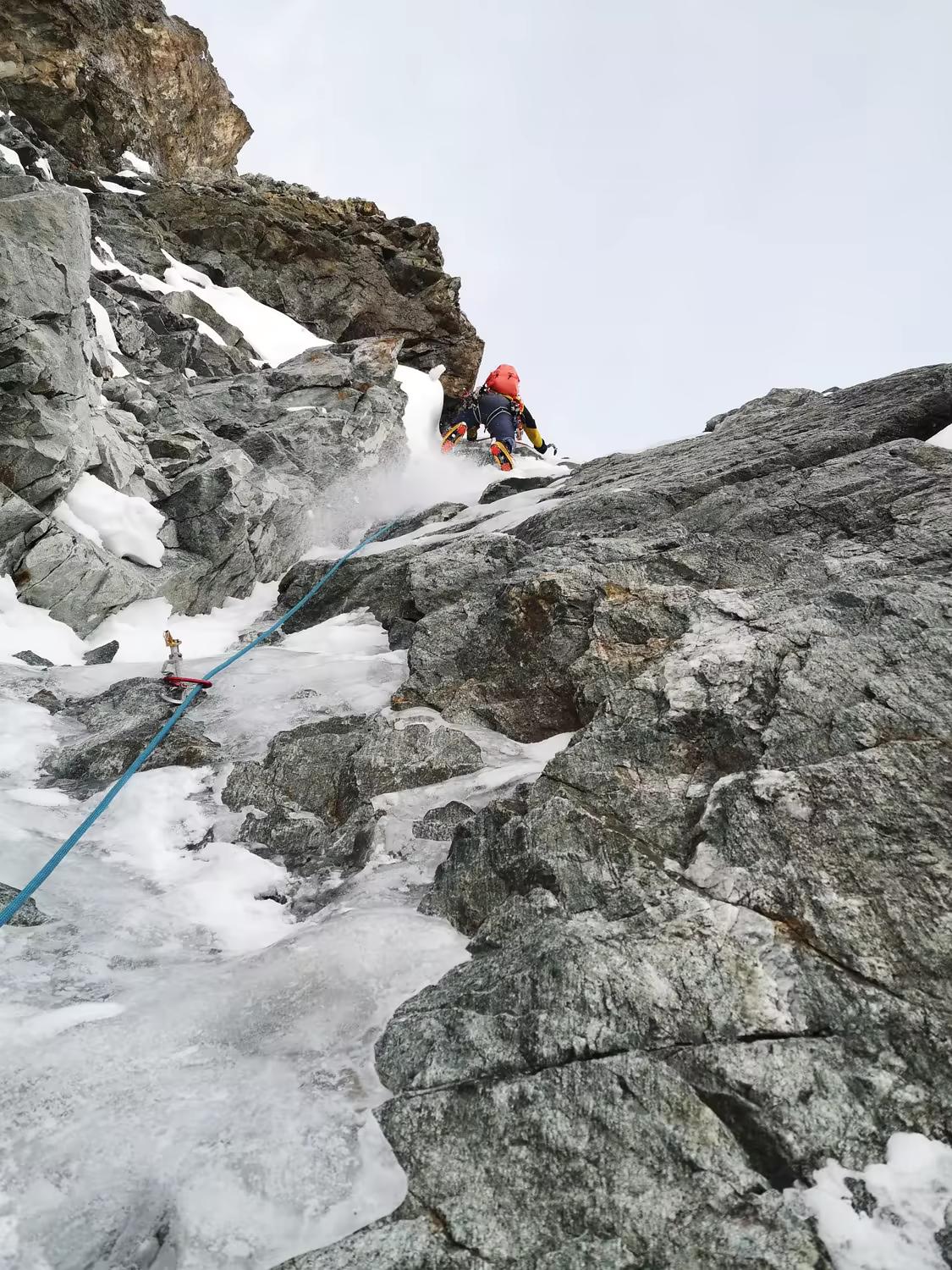
Snow, ice and mixed climbing: an overall grade of D+, with ice passages graded 3+, mixed climbing at M3+ and sections reaching 70°. Good snow conditions help progress; insufficient ice can make the gullies considerably trickier.
The Z, then the Grand Pic: around 400 metres of technical terrain and an indicative four to five hours to the Brèche du Glacier Carré, where the Z itself ends. We then continue on rock via the Cheval Rouge and Chapeau du Capucin to La Meije’s Grand Pic at 3,982 metres.
A descent that extends the adventure: abseils to the Brèche Zsigmondy, a traverse of the ridge towers and the Doigt de Dieu, followed by the Glacier du Tabuchet and the Aigle hut. Several more hours near 4,000 metres: best not to empty the tank at the summit!
Two or three days, depending on arrangements: descend to the valley after the traverse or spend a second night at the Aigle hut to spread the effort and enjoy the high mountains a little longer.
A serious, committing climb: altitude, difficult retreat and the length of the complete route require experience and strong endurance. We prepare the ascent together and choose our window according to conditions on the north face and ridges.
Ability and experience
These major alpine climbs are intended for experienced mountaineers familiar with traditional climbing and long mountain days. The grade doesn’t tell the whole story: you also need endurance, confidence and something left in reserve once the summit is behind you!
Technical ability: you confidently follow pitches at the required grade while carrying a backpack and wearing mountain boots when necessary. You are comfortable with crampon techniques, abseiling and downclimbing.
Fitness: you train regularly for endurance and can combine long hours of approach, climbing and descent, sometimes over several days.
Experience: you have completed several major alpine routes. You are comfortable on exposed terrain and can remain precise and focused despite fatigue.
Working as a rope team: you can belay your partner, manage your equipment and adapt your movement to the guide’s instructions. Efficient rope skills and clear communication help us enjoy the day.
Preparation: we choose the objective together according to your experience, fitness and mountain conditions. Good acclimatisation and, when needed, a preparatory climb help us approach the project with something in reserve.
First Contact
Please contact me first to tell me about your project and discuss your experience, skill level, availability, and goals. First Contact by email, phone, WhatsApp, or text message.
Reservations and Payment
Your reservation will be confirmed upon receipt of a check or bank transfer for a 50% deposit, which you must send me at least one month before departure. Full payment is due at the time of departure or upon your return from the race.
High-mountain activities, mountaineering, rock climbing, ski touring, ice climbing, and glacier hiking involve risks inherent to the mountain environment, which cannot be completely eliminated despite all precautions taken by the high-mountain guide. These risks include, in particular: rockfalls, serac falls, or avalanches; crevasses; changing weather conditions; acute mountain sickness; falls while ascending; as well as any accident related to the physical and technical demands inherent in these activities.
Notice of Schedule Change
The itinerary is provided for informational purposes only. The guide has sole discretion over the itinerary and may modify it at any time for safety reasons, depending on weather or snow conditions, or based on the group’s physical and technical ability. If weather forecasts make the planned ascents unfeasible, the guide will suggest an alternative summit or a reasonable alternative route. The group’s safety always takes precedence over adhering to the original itinerary.